Commercial · · 7 min read · by KB Quality Painting
Key takeaways
- Downtime usually costs more than the paint. Plan the schedule before the scope.
- Phasing and after-hours work can take closure days to zero in most spaces.
- Low-VOC coatings are what make next-morning reopening realistic.
- COIs and landlord approvals delay more commercial jobs than anything else — start them early.
Start with the cost you're not being quoted
A commercial repaint has two costs. The one on the quote, and the revenue you don't earn during it. For most businesses the second is larger — often by a lot. A retail space that closes for a Saturday, a restaurant that skips a dinner service, a dental practice that cancels a morning of appointments: any of those can exceed the entire painting invoice.
Which means the right way to plan a commercial repaint is backwards. Work out what your operation cannot lose, then build the scope and schedule around that — rather than accepting a schedule and discovering what it costs you.
Phasing: the core technique
Almost every commercial space can be divided so that work happens in one area while the rest operates. The trick is dividing along the right lines.
By area
Half the sales floor, one wing of offices, one corridor at a time. Physical containment separates the work zone from the operating zone. Best for large open spaces and multi-wing layouts.
By function
Back-of-house first while the front operates, then reverse. Works well in restaurants and retail where the two zones have genuinely different hours anyway.
By time
Overnight, weekends, or the hours your business is closed. This is the option that takes downtime to zero, and it's how most of our commercial work gets done.
By calendar
Around your actual business cycle. Retail before the season rather than during it; a school over the summer break; an accountant's office in June rather than March; a restaurant on its regular closed day. This is free and it's the most commonly missed opportunity.
Get the phasing in writing before the job starts — which areas, which nights, what's accessible when. A verbal understanding of phasing is where commercial jobs go wrong.
After-hours work: what makes it succeed
Overnight work is not simply the same job at a different hour. It needs to be set up for.
- Lighting. Proper task lighting, not the building's night lighting. Quality drops in poor light and nobody notices until morning.
- Access and security. Keys, alarm codes, after-hours building access, freight elevator reservations, and a clear procedure for locking up. Sort this a week ahead, not at 9pm on the first night.
- Reset before opening. Every night ends with the space put back — fixtures returned, floors clear, nothing that says "construction site" when staff arrive.
- A single point of contact. One person on your side and one on the contractor's, with phone numbers, so a question at 11pm has an answer.
Coatings that let you reopen the next morning
The reason after-hours commercial painting works at all is modern low-VOC and zero-VOC coatings. Solvent smell used to be the binding constraint — a space painted Saturday genuinely wasn't pleasant on Monday. That's no longer true and it's the single biggest change in commercial painting practice in the last twenty years.
Beyond odor, coating selection should follow how the surface will be used:
- High-traffic corridors and lobbies — commercial-grade scrubbable coatings, not residential eggshell. The cost difference per gallon is trivial against repainting a year early.
- Medical and food-adjacent areas — cleanable, moisture-tolerant, and where appropriate antimicrobial-capable products.
- Wash-down and wet areas — epoxy or moisture-tolerant systems.
- Structural steel, deck and CMU — primers matched to the substrate and exposure rather than a general-purpose product.
Getting this right is the difference between a repaint that lasts and one you're doing again in three years — which is another form of downtime.
The paperwork that delays jobs
In leased space, the most common cause of a delayed commercial repaint is not the painting. It's administrative:
- Certificates of insurance naming the landlord and property manager, with the specific coverage limits the lease requires.
- Landlord or property manager approval of the contractor, sometimes of the colors.
- Building access authorisation for after-hours work.
- Freight elevator and loading dock reservations, which in a busy building can be booked weeks out.
- Notice requirements to other tenants.
None of this is difficult, and all of it takes longer than people expect. We start it as soon as a job is confirmed rather than the week before mobilizing — see commercial painting for how we handle it.
A worked example
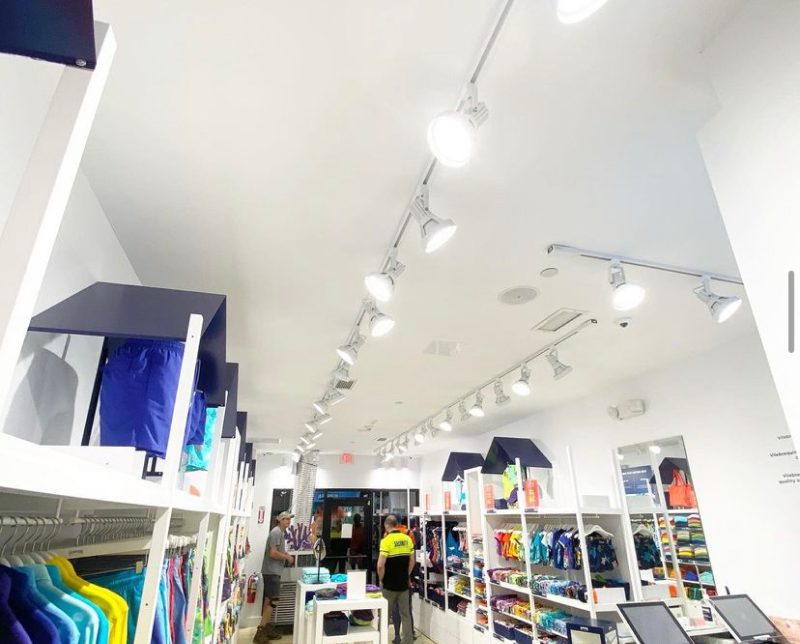
Our Middletown retail project is a straightforward illustration. A working sales floor with an open ceiling deck and exposed track lighting, in a business that could not afford to lose a trading day.
The plan: work overnight, phase the floor in sections, cover and where necessary move fixtures and return them before opening, protect the track lighting rather than masking the ceiling wholesale, use low-odor commercial coatings, and reset completely each night. The store opened on time every single day of the job.
The finish quality was assumed. The scheduling was the deliverable.
A short planning checklist
- Identify your genuinely un-loseable hours and areas first.
- Look at your business calendar for a naturally quiet window.
- Ask contractors specifically about after-hours capability — not everyone has it.
- Get the phasing plan in writing before work starts.
- Start COIs and landlord approvals immediately, not later.
- Confirm coatings are low-VOC if you're reopening the next day.
- Specify commercial-grade products in high-traffic areas.
- Agree the nightly reset standard explicitly.
- Name one point of contact on each side, with phone numbers.
If you'd like a walkthrough and a phased schedule for your space, get in touch — we'll put the plan in writing before quoting the paint.