Planning · · 10 min read · by KB Quality Painting
Key takeaways
- Painting changes the color of your cabinets. Refacing changes the door style. Replacing changes the layout. Pick the option that fixes the thing you actually dislike.
- The work itself is usually three to five working days, and you keep your sink, counters and appliances the whole time. Living without cabinet doors for most of that week is the real inconvenience.
- Paint is dry long before it is hard. Common cabinet enamels list recoat times of hours, but the makers say full hardness can take up to 30 days, so the first few weeks need a gentle hand.
- Cost is driven by the number of doors and drawer fronts, the door style, what the cabinets are made of and how big the color change is, far more than by the size of the kitchen.
Why so many Orange County kitchens are good candidates
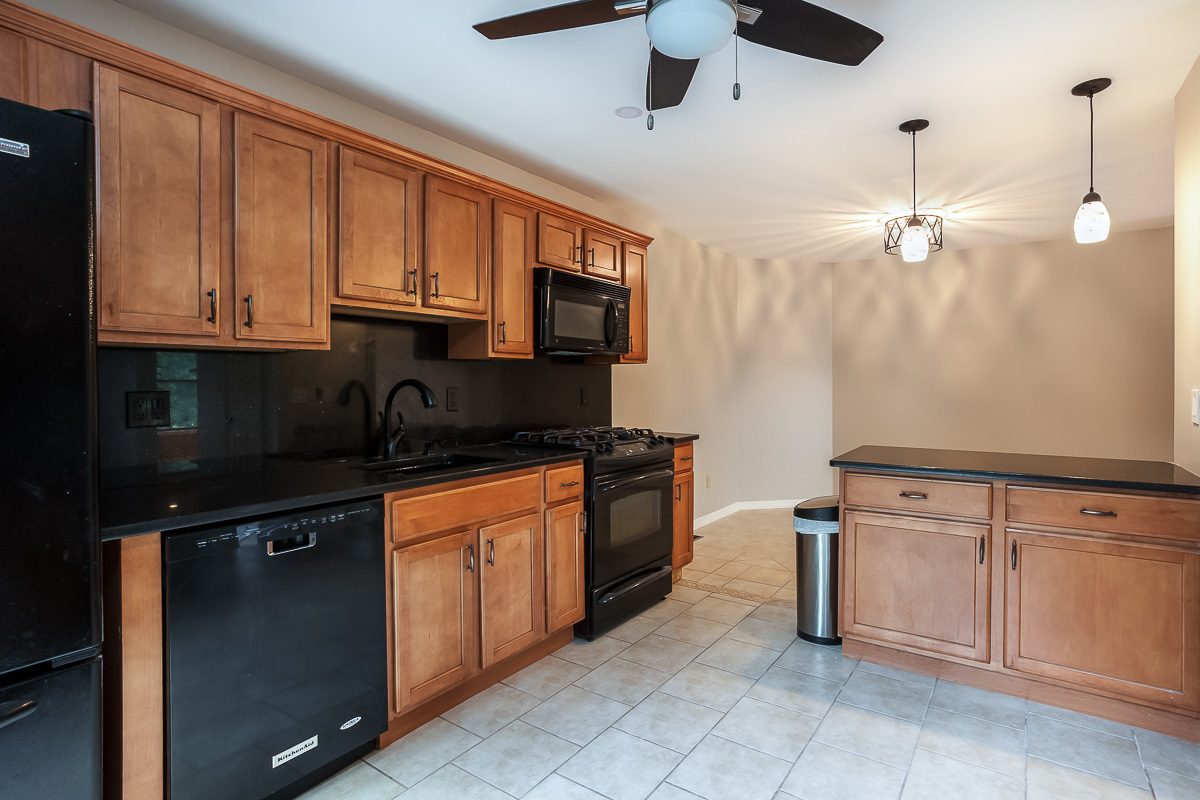
A lot of kitchens around Monroe, Highland Mills, Woodbury, Chester, Goshen and Warwick have the same story. The cabinets went in twenty or thirty years ago, they still open and close perfectly well, and the only thing wrong with them is the color: honey oak, orange-toned maple, or a stained finish that has gone dull and blotchy around the handles. The boxes are fine. The layout works. It is the finish that dates the room.
That is exactly the situation painting is built for. Done properly, it gives you a smooth, hard, factory-looking finish on the cabinets you already own, in under a week, without touching the counters, backsplash or floor. Done badly, it chips at the door edges within a year, which is why the method matters more than the paint color. Our professional cabinet painters in Orange County follow the same sequence on every kitchen, and this guide explains each step and why it is there.
If you are still deciding between painting and tearing the kitchen out, start with our side-by-side look at cabinet painting vs. replacing. This article picks up from there: what the job involves, how long you live with it, and how to make the finish last.
Painting, refacing or replacing: what each one changes
These three get lumped together, but they solve different problems. The quickest way to choose is to name what you dislike about the kitchen and pick the option that actually fixes it.
| Painting | Refacing | Replacing | |
|---|---|---|---|
| What changes | The color and finish of your existing doors, drawer fronts and frames | New doors and drawer fronts; exposed frames and end panels covered in veneer or laminate | Everything: boxes, doors, layout |
| Door style | Stays the same | Changes (for example raised panel to Shaker or slab) | Changes |
| Layout and storage | Stays the same | Stays the same | Can be redesigned |
| Counters, backsplash, floor | Untouched | Usually untouched | Often replaced or patched as well |
| Main risk | Chipping, if the prep was skipped | Glued veneer lifting near heat and steam | Cost and weeks without a kitchen |
If you like your door style and just hate the color, paint. If the shape of the doors is what feels dated, paint will not change that; a raised-panel door painted white is still a raised-panel door, and refacing is the honest answer. If the kitchen does not work, if the sink is in the wrong place or there is never enough drawer space, neither painting nor refacing fixes a layout, and that is a remodel.
All three depend on the cabinet boxes being sound. Swollen particleboard under the sink, sagging shelves or frames that have pulled out of square rule out painting and refacing alike, because both keep the boxes you have.
The process, step by step
Every step below exists to stop one specific failure. Skipping any of them is how a cabinet finish ends up peeling.
1. Doors, drawer fronts and hardware come off and get labeled
Each door and drawer front is marked to the opening it came from. Cabinet doors are fitted to their openings over years of use, and rehanging a door in the wrong spot is why some painted kitchens never quite line up again. Hinges and pulls are bagged by location.
2. Containment goes up
The kitchen is masked off: counters, appliances, floors, walls and any open doorways into the rest of the house. Spraying puts fine paint mist in the air, and containment is what keeps it on the cabinets and off everything else.
3. Degreasing
This is the step that decides whether the job lasts. Cooking leaves an invisible film on every surface near the range, and paint does not bond to it. It gets scrubbed off with a proper degreasing cleaner and rinsed, on the boxes as well as the doors. Nothing about it looks impressive, which is exactly why it is the first corner that gets cut.
4. Sanding, filling and repairs
The existing finish is sanded to give the primer something to grip. Dents, chips and any old hardware holes you no longer want are filled. If you are changing to pulls with a different spacing, this is when the old holes disappear. Oak has an open grain that reads through paint, so if you want a perfectly smooth look the grain is filled now; if you like the texture, it is left.
Built before 1978? Original painted cabinets in an older house may have lead in the lower layers, and sanding them falls under the EPA's lead-safe work rules. Factory-stained cabinets from later decades are a different matter. Our guide to lead paint safety in pre-1978 homes explains what applies.
5. A primer chosen for what the cabinets are
Primer is not one product. Bare wood, factory-finished maple, oak, thermofoil and laminate each need a bonding primer suited to that surface. Oak is a special case when it is going white or a pale color: it contains tannins that can bleed through light paint as yellowish or brown marks, so it needs a stain-blocking primer underneath.
6. Sprayed finish coats
Doors and drawer fronts are sprayed flat on both sides, so the paint levels out without sagging. Boxes and face frames are sprayed in place inside the containment. A sprayed finish has no brush marks or roller texture, and it gives a harder, more even film at the edges, which is where cabinets take the most wear.
7. Reassembly and adjustment
Once the coats are dry enough to handle, hardware goes back on, doors return to their own openings, and every hinge is adjusted so the gaps are even and the doors sit square. You walk through it with us before the job is called done.
How long your kitchen is out of action
Most kitchens take three to five working days. A large kitchen with an island, a run of tall pantry cabinets or a lot of drawers sits at the longer end; a small galley kitchen at the shorter end. Here is what that week looks like from your side of the plastic:
- You keep the essentials. The sink, counters, refrigerator and stove stay usable, though the room around them is masked off during spraying. Plan simpler meals rather than takeout every night.
- You will be living without doors. For most of the week the boxes are open. Emptying the cabinets before we start keeps your dishes and food out of the dust and the work area.
- Drying between coats. Cabinet enamels list recoat times in hours rather than minutes. Two widely used ones show the range: Sherwin-Williams' data sheet for Emerald Urethane Trim Enamel lists a 4-hour recoat time, while Benjamin Moore's sheet for ADVANCE lists 16 hours. Both assume about 77°F and 50% humidity, and both call for the surface to be at least 50°F. Coats are spaced to suit the product and the weather in your house, not hurried.
Dry is not the same as cured
This is the part people do not expect. The paint is dry to the touch within hours and the doors go back up within days, but the film keeps hardening for weeks afterwards. Benjamin Moore, for example, says ADVANCE can take up to 30 days to reach optimum hardness, depending on conditions. Until then the finish is softer than it will be and easier to mark.
In practice that means a few weeks of being gentle: no shelf liner or rubber mats on fresh shelves, no slamming doors, wiping spills with a soft cloth rather than a scourer, and not leaning heavy items against painted edges. You get the cure schedule in writing so nobody has to guess.
Hosting this holiday season? If you want the kitchen finished before Thanksgiving or the December holidays, count backwards from the date with the cure time in mind, not just the working days. A kitchen finished the week before a big gathering will look perfect but will still be curing while it gets its heaviest use of the year.
What drives the cost
Every cabinet job is quoted after seeing the kitchen, because two kitchens of the same size can be very different jobs. The things that actually move the price:
- Number of doors and drawer fronts. Each one is removed, prepped, primed and sprayed on both sides, so the count matters more than the room's square footage.
- Door style. A flat slab door is quicker than a raised-panel or detailed door with grooves and profiles that all need sanding and careful coating.
- What the cabinets are made of. Oak that needs grain filling and stain-blocking primer takes more steps than smooth maple. Thermofoil and laminate need their own bonding primer.
- The size of the color change. Stained wood to white takes more build than one painted color to a similar one.
- Repairs and extras. Filling old hardware holes, an island in a contrasting color, painting the box interiors, or adding a bathroom vanity or built-ins in the same visit.
- Condition. Heavy grease, water staining or damaged edges add prep time.
Two things that do not add much: a two-tone scheme, since you are paying mostly for labor rather than paint, and doing the kitchen walls and ceiling at the same time, which saves a second visit. Adding the room to an interior painting job in the same mobilization is significantly cheaper than booking it separately later. For how painting compares with replacement on price, see the painting vs. replacing comparison.
Finishes and colors that hold up
Sheen. Cabinets want satin or semi-gloss. Both wipe clean and stand up to handling; semi-gloss is tougher and shinier but shows every dent and imperfection in the door, satin is more forgiving. Flat and eggshell have no place on a kitchen door. Our paint sheen guide goes through where each one belongs.
Whites are not all the same. White is the most requested cabinet color and the easiest to get wrong. A warm white can look cream next to cool-toned counters; a stark white can look blue under daylight from a north-facing window. Always look at a sample on a door, in your kitchen, at night and in daylight, next to the countertop.
Put deeper colors where the wear is. Base cabinets and islands take kicks, bags, and dogs. A deeper green, navy or charcoal there, with lighter uppers, hides scuffs and is one of the most requested looks we do. If you are torn, a color consultation settles it quickly, and our guide on choosing interior paint colors covers how light changes color through the day.
Is now a good time?
Cabinet painting is indoor work, so it is not tied to the exterior season, which in the Hudson Valley closes in late October. Interior schedules generally loosen up over the winter once outside work stops, which makes late fall and winter a sensible time to get a kitchen done. The one condition is that the house is heated: the paint needs the surface to be at least 50°F, which any lived-in kitchen easily is.
Getting a straight answer on your cabinets
Most of the questions that matter, whether the boxes are sound, what the doors are made of, whether oak grain will show, how long your particular kitchen will take, are answered in a few minutes standing in the room. You can see the kind of kitchen and living-area work we do in this kitchen and living repaint.
We paint kitchens across seventeen Orange County towns. Book a free estimate with our cabinet painting and refinishing team and we will tell you honestly whether your cabinets should be painted, refaced or replaced, and what the job involves. More answers are on our FAQ page.