How-To · · 9 min read · by KB Quality Painting
Key takeaways
- Vinyl can be painted, but color is the constraint. Going darker than the siding was made in lets the panels absorb more heat, and heat is what makes vinyl warp and buckle. Stay the same shade or lighter unless the product is formulated and rated for that color on vinyl.
- Painting vinyl is a one-way decision. It commits you to repainting every eight to twelve years, and the siding industry's own trade association warns it can void the product warranty. Check yours first.
- Old aluminum siding almost always chalks. Paint bonds to the chalk rather than the metal unless it is washed off completely, so the wash and a chalk test decide whether the job lasts.
- Paint will not fix siding that is cracked, brittle, loose or already warped. That is a replacement conversation, and it is better had before anyone opens a can.
Why this question comes up so often here
Drive through the subdivisions around Monroe, Chester or New Windsor and you will see a lot of vinyl, and on older ranches and split-levels, a fair amount of factory-finished aluminum. Both were sold as "never paint again" siding, and for years they live up to it. Then the color fades unevenly, the south side goes chalky, or you simply want the house to look like something other than the builder's almond, and the question becomes whether you can paint it at all.
The short answer is yes, for both. The longer answer is that vinyl and aluminum each have one specific way of going wrong when they are painted, and neither failure can be fixed by painting again. This guide covers what those are, how we prepare each surface, and when the honest recommendation is to replace the siding instead.
Vinyl siding: the problem is heat, not adhesion
Vinyl is not hard to get paint to stick to once it is clean. A good 100% acrylic exterior paint bonds to it well. The difficulty is that vinyl moves. It expands in the sun and contracts in the cold far more than wood or fiber cement does, which is why it is hung loosely on its nails rather than fastened tight. It is designed to slide.
The color it came in was chosen with that movement in mind. A darker surface absorbs more of the sun's heat, and if you paint a light panel a much darker color, the panel runs hotter than it was ever made to. On a south- or west-facing wall on a July afternoon, that can be enough to make it bow, ripple and buckle between the nails. Once vinyl has distorted, it does not flatten back out. The fix is new panels.
For a long time the rule was simple: repaint vinyl the same color or lighter, never darker. Paint manufacturers have since developed formulations that reflect more heat, so a limited range of deeper colors is now possible. Sherwin-Williams, for example, publishes a VinylSafe palette of about a hundred colors, including some darker ones, formulated to resist warping when applied to a sound, stable vinyl substrate with specific products from its exterior line.
The practical rule: pick from the manufacturer's vinyl-safe list, in the product it is rated for. A dark color from a regular fan deck, mixed into ordinary exterior paint, is how vinyl ends up warped. If the color you love is not on the list, the closest safe shade is the answer. A color consultation is a good way to find one that still gives you the look you are after.
Sun exposure matters too. A dark-ish vinyl-safe color on a shaded north wall under mature trees is a very different proposition from the same color on an open south elevation. We look at every side of the house, not just the front, before recommending how far a color can go.
Check your warranty before you paint vinyl
This is the part people skip. The vinyl siding industry's own trade association notes that painting is often unnecessary, because the color is designed to last, and that painting could void the product warranty. Many vinyl warranties are long and some are transferable to a buyer, so if your siding is fairly new, find the paperwork or contact the manufacturer before you decide. A faded, twenty-five-year-old installation may have little warranty value left. A ten-year-old one might.
The other thing to be clear-eyed about is that painting vinyl turns a no-maintenance surface into a painted one. From then on it needs repainting on roughly the same cycle as other painted siding, which our guide to how long exterior paint lasts in the Hudson Valley puts at eight to twelve years for vinyl and aluminum. That is a perfectly reasonable trade for a lot of homeowners. It is just a trade you should make knowingly.
Aluminum siding: the problem is chalk
Aluminum siding came from the factory with a baked-on finish, and after decades of sun that finish breaks down into a fine powder on the surface. Rub your hand across a sunny wall on an older house and it will probably come away white or tinted. That is chalk, and it is the single thing that decides whether paint on aluminum lasts.
Paint applied over chalk bonds to the chalk, not to the siding. It looks fine for a season, then lets go in sheets, because it was never attached to anything solid. We see this regularly on houses where a previous coat was rolled straight on without a proper wash. If new paint is peeling off in large flakes with older paint or bare metal showing underneath, our guide to why exterior paint peels explains how to read it.
A few other things are specific to aluminum:
- Dents do not disappear under paint. Fresh, even paint actually makes hail and ladder dents more visible in raking light. Badly dented pieces can sometimes be replaced individually if matching profiles can be found; otherwise, expect to see them.
- Bare metal needs a primer that bonds to it. Where the factory finish has worn through, or on scratched and replaced pieces, a bonding primer suited to aluminum goes on before the finish coats.
- Color is less critical than on vinyl. Aluminum does not warp from heat the way vinyl does, although darker colors still fade faster on sunny elevations.
How we prepare each one
Most of the difference between a siding paint job that lasts and one that fails happens before any paint is opened. The sequence is similar for both materials, with a couple of important differences.
| Step | Vinyl | Aluminum |
|---|---|---|
| Inspect | Look for cracked, brittle, loose or already-warped panels, and check the warranty | Look for dents, loose or missing pieces, and bare metal |
| Wash | Low pressure, spray aimed downward so water is not forced up behind the laps | Thorough wash and scrub to remove all chalk, not just the visible dirt |
| Test | Surface clean and dry to the touch | Chalk test after washing: wipe with a dark cloth. If it still comes away colored, wash again |
| Dry | One to three days, depending on weather and exposure | One to three days |
| Prime | Usually not needed on sound, clean vinyl with the right topcoat | Bonding primer on bare metal, worn areas and replaced pieces |
| Color | Same shade or lighter, or a color from a vinyl-safe list in its rated product | Open choice, with faster fading on dark colors in full sun |
| Finish | Two coats of a quality 100% acrylic exterior paint | Two coats of a quality 100% acrylic exterior paint |
The wash is where a lot of cheaper jobs go wrong. Blasting siding at high pressure from below drives water behind the panels, where it sits in the wall, and on vinyl it can knock panels out of their locks. We cover what each siding type can safely take in soft washing vs. pressure washing, and it is part of our washing and exterior prep service for exactly this reason.
One thing we deliberately do not do on vinyl is caulk the laps or the channels around windows and corners. Vinyl needs to slide in those joints as it moves, and the gaps are also how any water that gets behind it drains out. Sealing them up to make the paint job look tidier works against the way the siding is designed.
What about the trim, shutters and gutters?
Siding is rarely the only surface on the house. On a typical vinyl or aluminum home, the aluminum-wrapped fascia and window trim, vinyl shutters, and the gutters all tend to fade along with it, and painting the siding without them usually looks unfinished. Vinyl shutters follow the same color rules as vinyl siding. Gutter faces often carry black streaks that no amount of rinsing removes, because they are oxidized aluminum and asphalt runoff and need a dedicated cleaner before they will take paint. Wood trim, porch floors and doors are a normal exterior painting job in their own right.
If the house was built before 1978, any original wood trim, sills or doors may carry lead-based paint in their lower layers, even where the siding itself is vinyl or aluminum. Scraping those surfaces falls under the EPA's lead-safe work rules. Our guide to lead paint safety in pre-1978 homes explains what that means for you.
When to replace instead of paint
Paint is a finish. It cannot hold a failing material together, and we will tell you plainly at the estimate if your siding is past the point where painting makes sense. The signs:
- Vinyl that is cracked, chipped at the bottom edges, brittle to the touch, or already rippled and bowed.
- Panels that are loose, missing or have blown off in wind, especially if matching replacements are no longer made.
- Aluminum with widespread dents across the most visible elevations.
- Signs of water getting behind the siding: soft sheathing, stains on the inside of exterior walls, or peeling interior paint along outside walls.
In those cases the money is better spent on siding repair or replacement, which is a siding contractor's job rather than ours. If only a few panels are damaged and the rest are sound, a siding repair followed by paint is often a sensible middle path, and painting blends the new pieces with the old.
What painting vinyl or aluminum costs, roughly
Siding type is one of the biggest factors in any exterior quote. Vinyl and aluminum usually need less surface preparation than wood, with no scraping of old paint or sanding of raised grain, but aluminum's chalk removal and bare-metal priming, and the care vinyl needs with washing and color, still take real time. Our exterior painting cost guide walks through how siding type, height, trim and condition shape the price.
Timing in Orange County
Late September and early October are still good exterior painting weather in most years, but the season closes in late October once overnight lows stop paint from curing properly. If you are only now weighing up whether to paint your siding, the realistic plan is to decide this fall, check the warranty and settle the color over the winter, and book an early spring slot. More on the calendar in the best time to paint a house in the Hudson Valley.
Getting an honest answer on your siding
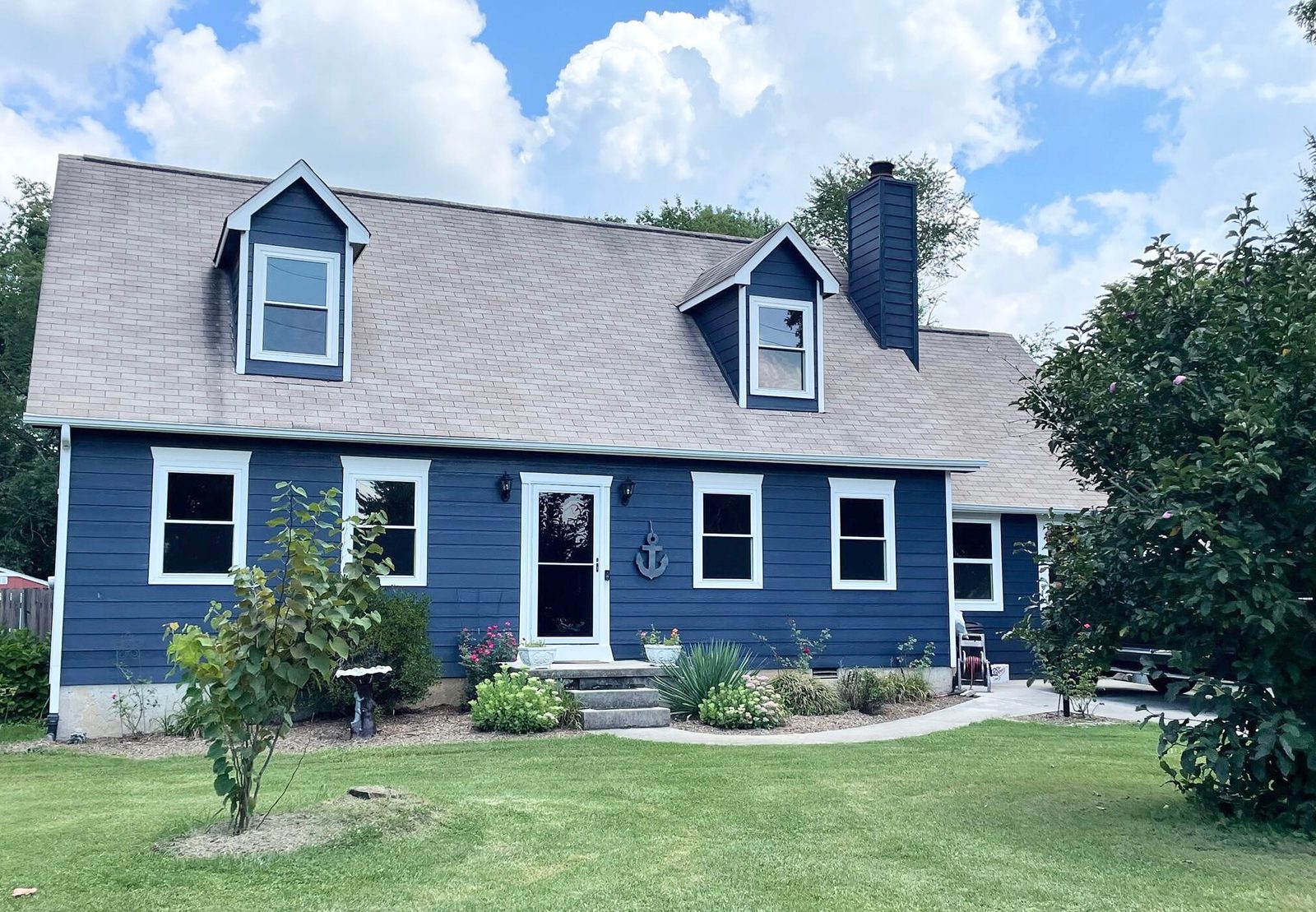
Whether your siding should be painted is a question best answered standing in front of it. Within a few minutes it is clear whether vinyl is sound, whether aluminum is chalking and how badly, and how far your preferred color can safely go on each side of the house. You can see how we handle the full exterior prep sequence on the Cape Cod exterior we repainted.
We paint homes across seventeen Orange County towns. Book a free estimate and we will tell you whether your siding is a good candidate for paint, what it would take, and when it would be better replaced. More common questions are answered on our FAQ page.