Planning · · 9 min read · by KB Quality Painting
Key takeaways
- Paint what the listing photos and the first walk-through will show: the entry, the main living spaces, the kitchen walls and any room in a strong or very personal color. Closets and a spare room that already look clean can usually wait.
- Repair before you paint. Cracks, nail pops, water stains and dents read as neglect in photos, and fresh paint over them makes them more visible, not less.
- On a house built before 1978, peeling or chipping paint is more than cosmetic. FHA appraisals require defective paint on pre-1978 homes to be corrected, and lead disclosure rules apply to the sale.
- Timing matters in the Hudson Valley. Exterior work closes down in late October, so a spring listing that needs outside touch-ups should be booked now; interior work runs all winter.
Why paint is the pre-sale job people get most wrong
When a house is going on the market, almost everyone paints something. The mistakes tend to go one of two ways. Some sellers repaint the whole interior in a week of evenings, and the listing photos show every wavy cut line and flashed patch. Others decide it is not worth the bother, list with a burgundy dining room and a peeling front porch, and spend the first round of showings hearing about it.
The better approach sits between the two. A pre-sale paint job is not a renovation and it is not a matter of taste. It is about removing the things a buyer will notice before they notice the house: marks, scuffs, strong colors, and anything that looks like maintenance was skipped. Here is how we would think about it for a house anywhere in Orange County, from a Monroe colonial to an older village home in Goshen or Warwick.
Start with what the photos and the first walk-through will see
Most buyers meet your house online first, and a listing gallery is mostly the same handful of rooms: the front of the house, the entry, the living room, the kitchen, the main bedroom and a bathroom. Those are the surfaces that do the selling, so they are where paint goes first.
| Surface | Usually worth painting before listing? | Why |
|---|---|---|
| Entry, foyer and stairwell | Yes | The first interior photo and the first thing a buyer sees in person. Scuffs along a stairwell wall show up in both |
| Living and family rooms | Yes, if dated, marked or strongly colored | The largest wall area in the photos |
| Kitchen walls | Usually | Grease and scuffs around the cooktop and doorways photograph badly under kitchen lighting |
| Kitchen cabinets | Sometimes | Worth it if the boxes are sound and the finish is dated or worn; not if they are already a clean neutral |
| Trim, doors and baseboards | Often | Yellowed or chipped trim makes fresh walls look unfinished |
| Ceilings | Only where stained or visibly marked | A water stain on a ceiling raises a question every buyer will ask |
| Children's rooms, offices, strong accent walls | Yes, if the color is very personal | Buyers struggle to see past a bright or dark color to the size of the room |
| Closets, a spare room that is already clean | Usually not | Little effect on how the house shows |
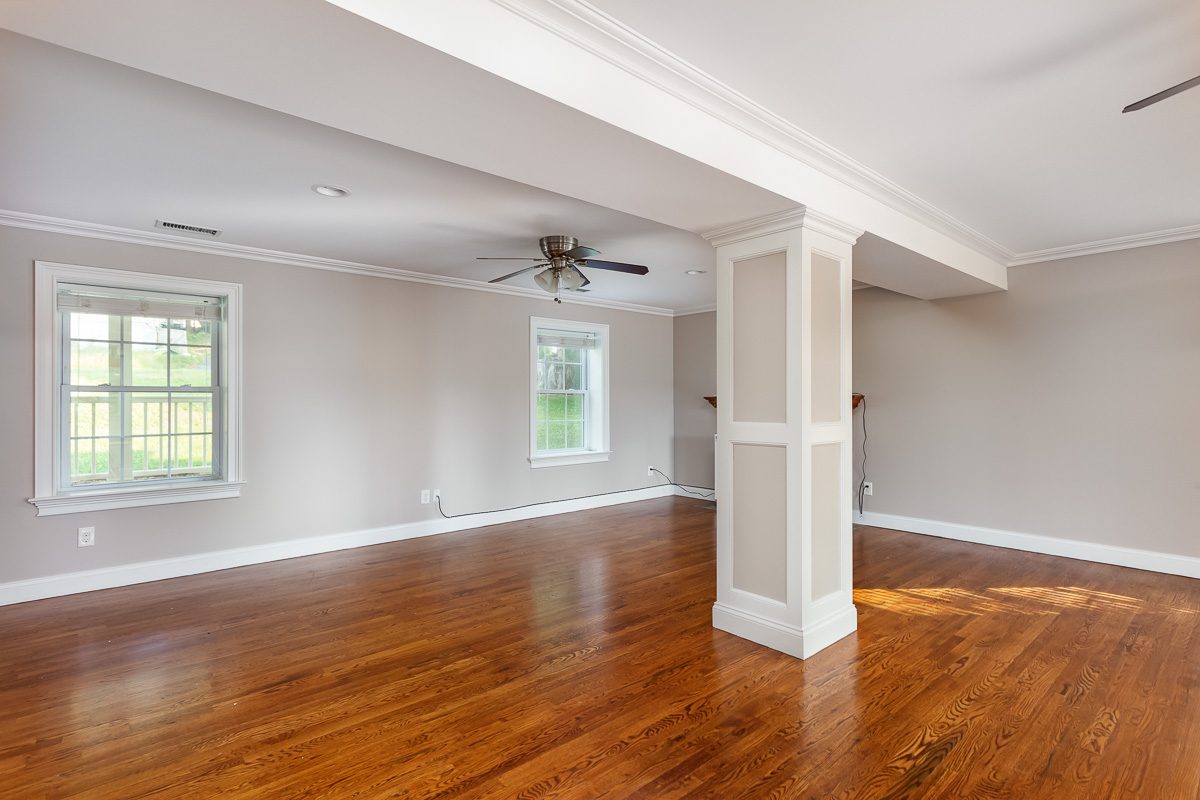
That list is a starting point, not a rule. A house that was repainted three years ago in sensible colors may need only touch-ups and a stairwell. A house on its original builder-grade flat paint, with fifteen years of touch-ups showing as a patchwork of slightly different sheens, is usually better served by repainting the main floor properly than by chasing marks room by room. That was exactly the situation in the whole-home interior repaint of a Monroe colonial.
Repair before you paint, or the photos will find it
Paint does not hide damage; it highlights it. A crack over a doorway, a row of nail pops down a hallway, a patched hole where a TV mount used to be — under a fresh, even coat all of them become more obvious, and listing photographers shoot with bright, raking light that shows every ridge.
The items worth fixing before a sale are the ones that read as neglect:
- Cracks and nail pops. A crack that is only filled will reopen through new paint at the next change of season, often while the house is still on the market. Cut out, taped and feathered, it stays closed. Our guide to cracked walls and old plaster explains the difference.
- Water stains. A brown ring on a ceiling tells a buyer there was a leak and invites the question of whether there still is one. Fix the source, then seal the stain with a stain-blocking primer before painting; ordinary paint lets it bleed straight back through. We handle that as part of drywall and plaster repair.
- Dents, gouges and anchor holes. Patched, sanded and spot-primed so they do not flash through the finish coat.
- Chipped trim and door edges. Scuff-sanded and repainted rather than dabbed.
Be honest with yourself about anything you are covering. Paint is a finish, not a disclosure strategy — if there was a leak, fix it properly and tell your agent, rather than painting over the evidence and hoping the inspector does not find it.
Choosing colors for a sale
This is the one time color should not really be about you. The goal is a set of walls that let the buyer picture their own furniture in the room, photograph cleanly, and flow from one space to the next without drawing attention to themselves.
In practice that means warm whites, soft greiges and light neutrals, used consistently through connected spaces so that an open-plan living area and kitchen read as one volume. It does not mean stark, blue-white everywhere, which can look cold and clinical in the north light a lot of Hudson Valley rooms get. Light direction changes colors more than people expect, and the same neutral can look warm in a south-facing kitchen and grey in a north-facing hall. We go through that in detail in how to choose interior paint colors, and a color consultation is the quickest way to settle it when a sale date is fixed.
Two practical points specific to selling:
- Sheen matters in photos. Very flat paint hides wall flaws but marks easily during showings; high-gloss on walls shows every imperfection under a flash. Eggshell or matte on walls, satin in kitchens and baths and semi-gloss on trim is a safe, washable combination. More in our paint sheen guide.
- Go one step, not three. Covering a deep red or navy with a light neutral often needs a primer coat before the two finish coats, so it takes longer than a like-for-like repaint. Build that into the schedule.
The outside: curb appeal and the inspection
The front of the house is the lead photo on almost every listing, and it is also what a buyer's home inspector will walk around first. For both reasons, the exterior items that matter most before a sale are the ones that look like deferred maintenance rather than style:
- Peeling or flaking paint on siding, trim, window sills and porch railings.
- Soft or rotted wood at sills, door frames and the bottom of trim boards.
- A front door and entry trim that are faded, chalky or chipped.
- Siding streaked green-black with growth on the shaded side.
Often a full exterior repaint is not what the house needs. A wash, targeted scraping and priming, carpentry repair at the sills and a freshly painted front door and trim can change the first photo considerably. If the paint is failing across several walls, though, spot repairs will not hide it, and an inspector will note it either way. Our article on why exterior paint peels explains how to tell a local problem from a coating at the end of its life, and soft washing vs. pressure washing covers getting growth off the siding without damaging it.
If your house was built before 1978
On an older home, peeling paint can affect the sale itself. For FHA-insured purchases, HUD's appraisal protocol requires appraisers to check interior and exterior surfaces of any home built before 1978 for chipping, flaking or peeling paint, and to condition the appraisal on its repair. That includes porches, railings, fences, detached garages and sheds. Separately, the federal lead disclosure rule requires sellers of most pre-1978 housing to disclose any known lead-based paint, share any reports they have, give the buyer the EPA's Protect Your Family From Lead in Your Home pamphlet, and offer a 10-day opportunity for a lead inspection. Your agent and attorney handle the paperwork; the practical point is that defective paint on an older house is worth dealing with before a buyer's lender asks you to.
Plenty of housing in Orange County predates 1978, particularly in the older village centers around Newburgh, Goshen and Warwick. Scraping and sanding that paint is regulated work under the EPA's lead-safe rules, with containment and specific cleanup — it is not a weekend job to squeeze in before photos. Read our guide to lead paint safety in pre-1978 homes before anyone starts scraping, yourself included.
Timing a pre-sale paint job in the Hudson Valley
Our seasons decide a lot of this. Exterior coatings need surface and overnight temperatures above the product's minimum to cure, and in Orange County that window usually closes by late October and reopens in late April. The best time of year to paint here covers why the overnight low matters more than the afternoon high.
- Listing this fall: exterior touch-ups need to happen in the next few weeks. Interior work can run right up to photos.
- Listing in spring: the winter is ideal for interiors — lead times are shorter and the house is quiet. Anything outside that needs attention should either be done before the cold arrives or be booked for the first dry weeks of spring, which is also when exterior schedules fill fastest.
- Already living out of boxes: an empty or half-packed house is the easiest one to paint. Painting after most furniture has moved out and before photos are taken is often the most efficient order.
Leave a margin. Walls need time to cure before they are wiped, furniture is pushed back against them and a stager moves art around, and a photographer wants a finished house, not one with drop cloths in the corner. Our checklist on preparing your home for painters helps whether you are staying or moving.
DIY or hire it out?
Plenty of sellers paint a bedroom or two themselves, and a careful DIY job on a small room is perfectly reasonable. The places where it tends to go wrong before a sale are the ones buyers look at hardest:
- Cut lines at ceilings and trim, which listing photos enlarge.
- Stairwells and two-story foyers, which need staging rather than a ladder on the treads — see what high-access painting involves.
- Cabinets, where a brushed finish over unprepared doors looks worse than the original. Our cabinet painting vs. replacing guide explains when refinishing is worth it.
- Anything on a pre-1978 house that involves scraping or sanding.
Whoever does it, ask for a written scope with the rooms, surfaces, repairs and number of coats spelled out, and a working-day range that fits your listing date.
Getting a pre-sale estimate
Tell us your target listing date when you call. We will walk the house with you, point out what a buyer and an inspector are likely to notice, and separate the surfaces that are worth painting from the ones that can be left alone — which is often a shorter list than sellers expect. We provide interior painting, exterior painting and the repair work that goes with both across seventeen Orange County towns.
Book a free estimate, and see our FAQ page for answers to other common questions.